Jim for Johns & James Islands
Check this page often for District 3 updates
Click HERE to Subscribe! --->>>
Be the first to know via regular e-mail updates from Jim!
Click here to watch THIS video on YouTube: https://youtu.be/tA1jk4IXGVE?feature=shared
Click here for Part 2: https://youtu.be/iaVWlGkEbcg
Click here for Part 3: https://youtu.be/VEnt0nEzI9k
Other links mentioned in this video:
- Charleston County Transportation Committee: https://www.charlestonctc.org/
SC State House Representatives:
- D115 - Spencer Wetmore: https://www.scstatehouse.gov/member.php?code=1905681590
- D116 – James Teeple: https://www.scstatehouse.gov/member.php?code=1812215692
- D119 - Leonidas E. "Leon" Stavrinakis: https://www.scstatehouse.gov/member.php?code=1747727063
SC State Senate Representatives:
- D20 - Ed Sutton: https://www.scstatehouse.gov/member.php?code=1782954332
- D41 - Matt Leber: https://www.scstatehouse.gov/member.php?code=1074431690
- D45 - Margie Bright Matthews: https://www.scstatehouse.gov/member.php?code=0194318159
We all know the traffic on Johns Island is bad. But how much worse is it during the school year vs. Summer break? This video illustrates how time-based traffic analysis can help local government make better decisions on infrastructure investment.
Share this video via YouTube, here: https://youtu.be/hJUwnyinWL4
Due to years of mismanagement, the traffic on Johns Island will get worse in the short term, as housing developments are being built far faster than infrastructure is being built to support it. My #1 priority will be to expedite getting funding for infrastructure improvements sooner than currently planned, and finding ways to slow the growth of developments.
Please feel free to share the link: https://www.youtube.com/watch?v=6Qv8Dxd70_s
Send a Marine.
Jim leverages his invaluable experience in navigating hostile environments to foster collaboration, yielding optimal and streamlined outcomes.
Please feel free to share the link: https://www.youtube.com/watch?v=jRv02Rq8faI
Commentary: Too many unaffordable state-owned roads cripple city planning
Post & Courier
Imagine your boss wants you to make two dozen peanut butter and jelly sandwiches for a lunch party in Charleston in two days. Normally, a simple task. Three ingredients, no problem. You have the peanut butter, and you have the jelly. But your company’s office in Columbia has the bread.
You call the Columbia office, and someone says they’ll send the bread in two days so it arrives on the morning of the lunch party. When your Colombia co-worker arrives, he says he only had enough money for one loaf of bread to make 12 normal sandwiches. You have no choice but to let half your co-workers go hungry or feed them each just a half sandwich or a gooey, open-face lunch. What a mess.
The analogy equates to South Carolina's arcane system of state-owned roads within municipalities. The state's Local Government Comprehensive Planning Enabling Act of 1994 requires counties and municipalities to develop comprehensive plans every 10 years. Those plans are intended to coordinate anticipated population and economic growth, resources, facilities (including police and fire), housing, land use, transportation and resiliency.
Extending our analogy, let’s call housing and land use peanut butter, police and fire protection the jelly and road infrastructure the bread. Every 10 years, municipalities plan for anticipated population growth (peanut butter) and supporting services (jelly), and can only hope that the state supplies enough bread. A common military phrase is “Hope is not a course of action,” and hope has failed us all in this case: The result is wildly out-of-sync growth and worsening traffic congestion in our cities and towns.
At 41,000 miles, South Carolina has the fourth most miles of state-owned and maintained roads in the nation. At 28.75 cents per gallon, our state's gas tax — which funds transportation infrastructure — ranks 30th in the nation. This means there are far more roads than the state can afford to improve with rapid population growth. I strongly encourage you to look at the state's interactive website to see how many state-owned roads are in your neighborhood. Simply put, the state lacks the “bread” for enough PB&J sandwiches.
It’s not the Department of Transportation's fault that it can’t afford to improve state roads within municipalities; the Legislature bears responsibility. Recent efforts, including the governor's push for more than $1 billion in additional state funding and modernization reforms, aim to help, but billions more dollars are needed.
Acknowledging this, House Speaker Murrell Smith commissioned a SCDOT Modernization ad hoc committee comprised of state House members, including several from the Lowcountry. They traveled the state to study the problems and have proposed fresh ideas to the General Assembly to fix the broken system. Whether that happens will become clearer in the next few months.
In the meantime, the burden has fallen on counties to find creative ways to buy more bread to go with municipalities’ peanut butter and jelly. Voters in several, including Berkeley, Dorchester, Horry, Jasper and Richland, have said yes to transportation sales tax referendums to fund local improvements. Charleston County voters approved half-cent transportation sales taxes in referendums in 2004 and 2016.
Charleston County votes rejected a transportation sales tax extension in 2024, and the county is preparing to try again this year, this time with significant municipal input. If it fails, can the state bail us out? No.
State Transportation Director Justin Powell says the agency only has enough money to improve bridges and interstates and to keep 41,000 miles of roads paved. The only viable path to improving our state roads to accommodate record population growth is a 2026 county transportation sales tax (which would extend the expiring 2004 tax); the extension would generate about $4.25 billion over 25 years to fund primarily state roads, followed by greenbelt and public transit. Charleston County voters might get a chance this November to approve more bread and help fix our PB&J dilemma, before congestion gets even worse.
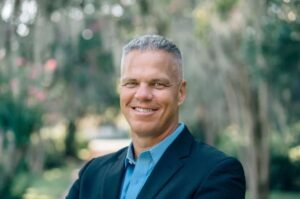
Jim McBride is a Charleston City Councilman representing District 3, which includes Johns Island.
Commentary: Cities need control of roads and a state concurrency law
Post & Courier
Charleston County is wallowing through a painful paradox 30 years in the making that is composed of two parts. The first is that the high demand for new housing has vastly exceeded the supply, leading to astronomical increases in the price of buying or renting a home. The second part is that rapid regional population growth has vastly exceeded the infrastructure to support it.
Part 1 of the paradox leads to housing located within an hour of economic centers being too expensive for most first responders, nurses, teachers and entry- to mid-level employees in almost any industry. From January 2020 to January 2025, the median price of a Charleston County single-family detached home shot up 79%, from about $390,000 to $700,000.
Among the consequences: Our public safety and local economy are under strain; the distance these employees must live from where they work contributes to traffic congestion; and the number of homeless in the region has risen by more than 50% since 2021.
In Part 2 of the paradox, despite the relative lack of available housing, the number of units and the population have grown substantially. Census data for our Sea Islands shows their population grew 53% from 2010 to 2020. In just the city portion of Johns Island, the population grew by 1,318 from 2023 to 2025. Our infrastructure — especially our road network — has fallen far behind.
Taking the two parts together: The best way to reduce the price of buying or renting a home in Charleston is to increase housing supply relative to demand, but the subsequent population growth overwhelms our infrastructure, resulting in more time and money spent on longer commutes, more traffic accidents and more strain on our public safety comprised of first responders who can’t afford to live in the communities they serve.
A recent positive development is our state lawmakers crafting legislation on concurrency. If it were to pass next year, it would mean that municipalities could require that development be “concurrent upon” there being adequate infrastructure in place to support it. If the concurrency proposal does become law, there remains one systemic impediment that needs to change: State-owned roads inside city limits, which cities have very little ability to improve. There are hundreds of state roads in Charleston alone that the state readily admits it does not have the money to improve, and barely enough to maintain.
A look at state-owned roads in parts of Johns Island, James Island and the peninsula speaks volumes. The S.C. Department of Transportation owns Main Road, Maybank Highway, Brownswood Road, Murraywood Road, Riverland Drive, all the roads in Riverland Terrace, Central Park Road, Fort Johnson Road, Folly Road, Calhoun Street, Broad Street, dozens of roads between the latter and many more. Because DOT cannot afford to improve them, Charleston County has resorted to periodic transportation sales tax referendums. Voters approved sales taxes in 2004 and 2016, but an attempt last year failed. The county will likely try again in 2026 because there simply is no other option in our current broken system.
The rest of the solution: Transfer state roads to municipalities.
In 2018, the Transportation Department started a pilot program to try to offload state roads within municipalities. The opt-in for the 2018 program is voluntary, but that does not go far enough. The current state transportation funding system, funded mostly via a 28-cent-per-gallon gas tax, already isn’t enough to improve the roads, so the whole state, county and municipal infrastructure funding system needs to change.
The solution is that the Legislature should pass a law that gradually offloads state roads inside municipalities above certain population thresholds (perhaps above 100,000, or the percentage of state roads gradually transfers to the municipalities over time as their population grows) over a 10-year period.
This would allow the state and the municipalities time to determine what, if any, state money would go to the municipality, and what road maintenance facilities, equipment and personnel could be transferred to each city. In the meantime, cities would have to determine additional revenue sources to maintain and improve roads soon under their purview. Only with municipal control of our roads can growing municipalities in South Carolina have any chance of synchronizing their growth and infrastructure, augmented by a new state concurrency law.
Jim McBride represents Charleston City Council District 3.
Commentary: Why 'yes' votes became 'no' on sales tax, and what Johns Island needs now
Post & Courier
The I-526 Mark Clark Expressway extension project has always been controversial, and ever more so as time goes on, cost projections rise and local populations increase.Many residents of Charleston City Council District 3 — the district I represent on Johns and James islands — wanted the Mark Clark built simply because they expected it to provide relief from traffic congestion. Those who do not want the Mark Clark built generally had a combination of four reasons: its cost, environmental impacts, doubt that it would provide real traffic relief (depending on the route of their daily commute) and a desire to pay less taxes.
During five Johns Island town halls — two co-hosted with Charleston County Councilman Joe Boykin before the November vote, and three after the vote — I learned a lot about why many people voted the way they did. Their views on the Mark Clark did not always predict how they voted in the county's 2024 transportation sales tax referendum. This question lost on Johns Island by 58% to 42%, but one major factor turned many would-be “yes” votes into "no" votes.
The unique “no” factor was the unanswered question about the construction timeline of both the Mark Clark and the other road projects. The most recent reference point for Johns Islanders is the Main Road Segment A project, aka the Main Road-Highway 17 flyover. This project was funded by the 2016 transportation sales tax, but it isn’t expected to be completed until 2027 — 11 years later. Furthermore, its cost ballooned 270% over its 2021 projection, and it lost an important bike-ped bridge along the Limehouse Bridge. Both were very unpleasant surprises.
By comparison, the Mark Clark is a much larger project. Had this year's referendum question passed, many voters presumed that it would take well over 10 years to build even the first phase. And what of the timelines of the other projects on the sales tax list, including Maybank Highway? Nobody knew. Would the Mark Clark — the only “priority” project — crowd out resources from the other projects? Nobody knew. The lack of information about a project timeline shook the confidence of many voters, leading to a lot of “no” votes.
Johns Island’s population has grown from 10,227 in 2000 to 22,854 in 2020, a 123% increase (and add 7,000 more to include the populations of Wadmalaw, Kiawah and Seabrook). Our infrastructure — roads, parks, schools, emergency services — has not kept pace. Reasons for that span over 30 years across all levels of local government. But all of Charleston’s Sea Island residents feel the pinch every day.
Main Road Segment A, when completed around 2027, will absolutely be a significant improvement, and Main Road Segment C is funded and plans are in development. But the Maybank Highway and River Road portions have almost no funding and are in desperate need of improvement.
Local government must prioritize road projects that can be executed relatively quickly. For example, Charleston County has plans for portions of Maybank Highway and River Road — e.g., the southern pitchfork and a new lane on Maybank from River Road to the Stono River bridge — that could advance if funded.
But now, there’s a new and immediate concern: A new elementary school opens on Johns Island in August. Located on one of the most dangerous roads in Charleston, it will bring buses and add about 200 cars daily on upper River Road. Despite a planned traffic circle in front of the school, upper River Road’s infrastructure is unsuitable to safely handle this surge in traffic.
I applaud recent talk of a collaborative, cross-government focus on transparently prioritizing projects across Charleston County to craft a new transportation sales tax referendum for 2026. Until then, I encourage allocating existing funds immediately toward projects that can be completed quickly to immediately alleviate traffic gridlock and improve safety.
Jim McBride was elected in 2023 to Charleston City Council's District 3 seat.
Post & Courier
Excerpts:
McBride says his military experience will help him handle infrastructure projects.
The retired Marine Corps lieutenant colonel floated ideas for reducing traffic, including creating reversible lanes along parts of Maybank Highway during rush hour. That proposal could require trimming an oak canopy to install signals. He told The Post and Courier that idea isn’t set in stone, adding he’d balance “the pain of the traffic is causing with the impact to the trees.”
“Growth is OK as long as it’s controlled,” he said at the forum.
Advocating for zoning rules limiting the number of units per acre is a “consideration,” he told The Johns Island Advocate, a community newspaper. McBride moved to the island in 2021.
McBride that night pitched himself as a coalition builder — a bridge between the city, county and state. It appealed to Brenda Davidson, as did the candidate’s military experience. “He’s handled so many things for the government, I think he could handle things in our city,” she said.
Johns Island Advocate
|

|
|